All Categories
Featured
The Art of the Offer: Working Out International Alliances...
Why UK Leaders Must Reconsider Resilience for the 2026 Ma...

The Principles of Device Knowing in Modern Recruitment Te...
How Circular Business Designs Are Boosting Manufacturing Margins
Table of Contents

Operational Circularity and the 2026 Regulatory Environment
The manufacturing sector in 2026 functions under a set of rules that would have appeared rigorous only a few years ago. Worldwide requireds concerning Environmental, Social, and Governance (ESG) criteria have actually moved from voluntary ideas to tough legal requirements. This shift means that the direct model of production-- taking basic materials, making an item, and disposing of it-- is now a monetary liability. Leaders in the regional industrial sector are currently concentrated on incorporating circular economy concepts not just to please environmentalists, but to secure their bottom lines from rising carbon taxes and disposal charges.
The 2026 regulatory environment is dominated by openness. The European Union's Business Sustainability Reporting Instruction (CSRD) has set a worldwide standard that numerous other areas are following. This needs producers to reveal their Scope 3 emissions, which consist of the entire lifecycle of their products. When a business can not track where its products pursue a sale, it deals with considerable penalties. Resource scarcity has likewise driven rates higher, making it more affordable to recover old products than to mine or collect new ones. Successful firms now see waste as a design failure rather than an inevitability of production.
A focus on Capability Centers has actually become a requirement for securing long-lasting contracts with major retailers. These sellers are under pressure from customers who demand to understand the ecological cost of every product. In this context, circularity is a tool for survival. It involves redesigning items so they can be quickly disassembled, fixed, or remanufactured. This method decreases the requirement for virgin products and assists business remain within the tightening limits of resource usage quotas set by global bodies.
ESG Mandates and Production Compliance in the region
Compliance in 2026 needs more than just an annual report. It requires real-time information flow throughout the supply chain. Producers in the local market should now offer digital product passports for whatever they develop. These passports act as a digital twin of a physical product, documenting every material used, its origin, and instructions for its ultimate recycling. If a component includes rare earth metals, the passport ensures those materials are recovered at the end of the item's life. This level of detail is now the floor for doing service in any developed economy.
The "S" in ESG-- Social-- has likewise gotten prominence. Production leaders are now held accountable for labor practices 3 or 4 levels deep in their supply chain. In 2026, technology permits near-instant verification of factory conditions. Ethical supply chains are no longer a marketing claim however a verifiable fact confirmed by third-party auditors and satellite tracking. Business found to be utilizing unethical labor are instantly cut off from sustainable financing choices, which can result in a fast increase in the cost of capital.
Governance has actually likewise shifted to include circularity at the board level. A lot of manufacturing firms now have a Chief Circularity Officer or a similar function that sits together with the CFO and CEO. Their task is to guarantee that the business's business model does not rely on a finite supply of resources. They look at how to move from offering products to offering services. Rather of offering a washing machine, for example, a business might offer a "tidy clothes" subscription, preserving ownership of the device and guaranteeing it is built to last for years and be easily refurbished.
Sustainable Finance and the Expense of Capital in 2026
The financial world has actually altered how it assesses manufacturing dangers. In 2026, banks and financial investment firms utilize circularity metrics to determine rate of interest on loans. A business with a closed-loop system-- where it recovers a high percentage of its items-- is viewed as a lower risk. This is since it is less vulnerable to the rate shocks of basic materials. Transitioning to these models typically needs considerable upfront investment, but the accessibility of green bonds and sustainability-linked loans makes this simpler for firms that can prove their effect.
Personal equity companies have also moved their focus. They are significantly looking for makers that have mastered the art of remanufacturing. This process involves taking an utilized item, replacing worn-out parts, and offering it with a new service warranty. In the industrial heartland, remanufacturing facilities are becoming as typical as initial production lines. The margins on remanufactured items are frequently greater because the energy and material expenses are substantially lower than making something from scratch.
Securing investment for Capability Centers requires a clear prepare for product recovery. Financiers in 2026 inquire about "reverse logistics" as often as they ask about sales growth. They wish to know how a company gets its products back once the client is finished with them. Without a solid response, makers discover themselves locked out of the most beneficial credit markets. This financial pressure is perhaps the most reliable motorist of circularity in the existing year.
Ethical Supply Chains and Product Traceability
Product traceability is the foundation of the ethical supply chain in 2026. Understanding where a piece of steel or a plastic polymer came from is vital for computing the carbon footprint of a finished good. Numerous manufacturers are now utilizing chemical tracers or microscopic identifiers that are embedded into raw products at the source. These "tags" remain with the material through every phase of production and use, permitting best transparency throughout the recycling stage.
This traceability helps eliminate the "gray market" of products that are often sourced from environmentally sensitive areas or through exploitative labor. In the surrounding region, producers are forming collectives to vet providers better. By pooling their resources, they can carry out deep-dive audits that would be too pricey for a single business to deal with alone. This collective approach to ethics has actually made the supply chain more resilient to political instability and environmental catastrophes.
The increase of regional sourcing is another byproduct of this movement. In 2026, shipping products across the world is progressively expensive due to maritime carbon taxes. Manufacturers are looking closer to home for their needs. They are finding that the "metropolitan mine"-- the scrap and waste produced by cities-- is a reliable source of top quality products. This shift towards localism decreases the carbon footprint and simplifies the task of making sure that every provider fulfills the company's ethical standards.
Reverse Logistics and the Recovery of Value
Reverse logistics is the process of moving products from their last destination back to the manufacturer for the purpose of recording value or proper disposal. In 2026, this is an advanced operation. It involves collaborations with waste management companies, merchants, and even the clients themselves. Many makers now provide incentives, such as discount rates on future purchases or direct money payments, for the return of old items. This ensures a constant stream of "secondary" basic materials that can be fed back into the production line.
Automated sorting centers in the region use advanced sensors to determine various grades of plastics and metals in seconds. These centers are often situated near factory to decrease transportation costs. As soon as the materials are sorted, they are cleaned up and processed into pellets or ingots that equal in quality to virgin materials. This technology has actually advanced to the point where the distinction between "new" and "recycled" is simply a matter of documentation, not physical performance.
The style of items has actually altered to accommodate these systems. Fasteners that can be gotten rid of with a single tool, modular circuit boards, and the elimination of permanent glues are now basic design practices. If a product can not be taken apart in under 3 minutes, it is typically returned to the design team for modification. This focus on disassembly makes the healing process rewarding, which is the only way to ensure it takes place at scale across the industry.
Strategic Application for Management
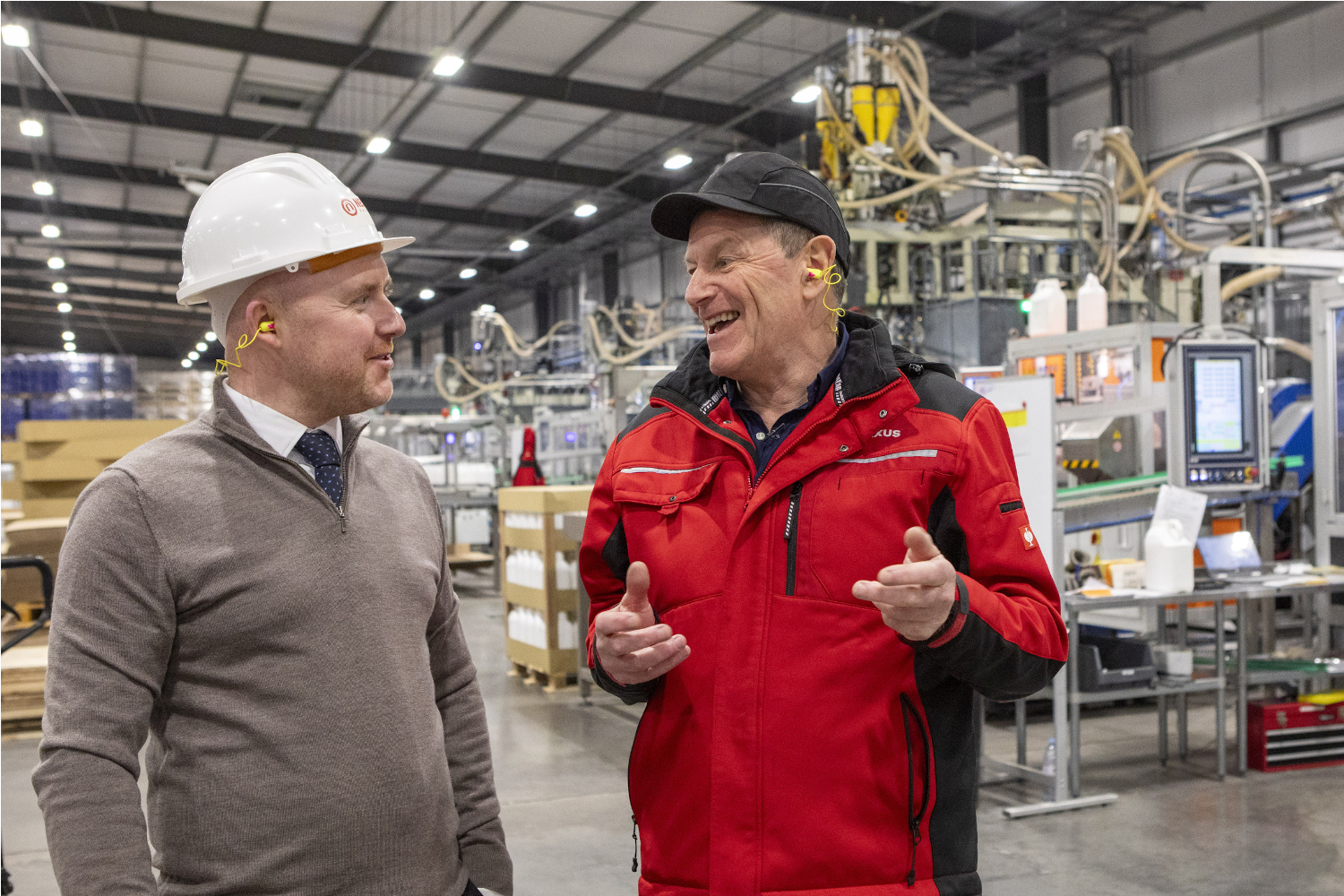
For leaders in the manufacturing space, 2026 is a year of difficult choices. Relocating to a circular design needs a total rethink of the business. It is not something that can be handled by a single department; it requires cooperation in between design, procurement, sales, and logistics. The business that are succeeding are those that have actually stopped viewing sustainability as a cost center and started seeing it as a driver of functional efficiency. Minimizing waste naturally reduces cost, and in a high-inflation environment, performance is king.
Training and advancement are also part of this modification. The abilities required to develop an item are different from the abilities required to take one apart and reconstruct it. Lots of firms in the local area are buying re-training their workforce for remanufacturing roles. These tasks are typically more stable and need a higher level of technical knowledge than standard assembly line work. By purchasing their individuals, manufacturing leaders are ensuring that their operations can manage the intricacy of a circular economy.
The focus stays on the long term. While the transition to circularity is tough, the threats of remaining with a linear design are far greater. Regulative pressure will just increase, and the schedule of inexpensive raw materials will continue to decline. In 2026, the path forward is clear: production needs to become a closed loop. Those who lead this modification will find themselves with lower expenses, much better access to capital, and a more faithful consumer base that values principles as much as quality.

Table of Contents
Latest Posts
Revenue with Function: Why Net Zero Is a Tactical Win

The Art of the Offer: Working Out International Alliances Effectively
Why UK Leaders Must Reconsider Resilience for the 2026 Market
Latest Posts
Revenue with Function: Why Net Zero Is a Tactical Win
The Art of the Offer: Working Out International Alliances Effectively
Why UK Leaders Must Reconsider Resilience for the 2026 Market